
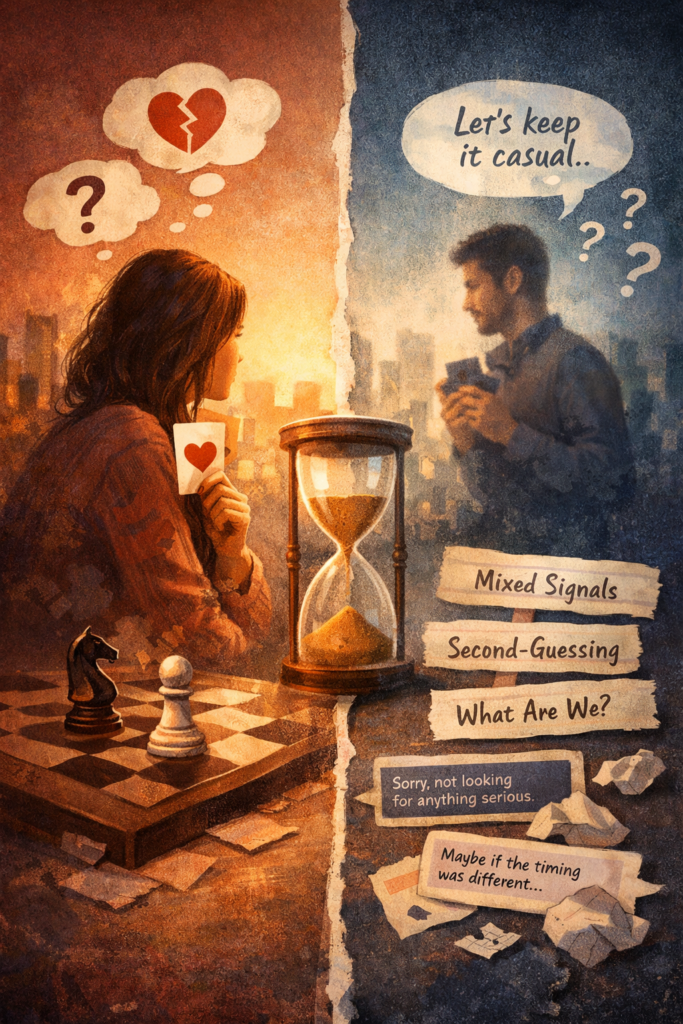
You know what you want. You’ve probably known for a while now—not in some vague, “someday I’ll settle down” way, but with a clarity that surprises you. You want a relationship. Or you want something casual but consistent. Or you’re genuinely not sure yet but you know you need space to figure it out without pressure.
The knowledge is there. What’s also there, sitting right next to that clarity like an unwelcome companion, is the gut-twisting feeling that saying any of this out loud will ruin everything. In countless conversations with women and men navigating modern dating, the same question surfaces again and again: when do you reveal what you actually want? Not the vague ‘seeing where things go,’ but the real truth—that you’re not interested in casual dating for an indefinite period, or that you’re actively looking to settle down within the next six months. Although…
This isn’t about convincing you to say more than you’re ready to—it’s about understanding why staying silent costs more than you think.
This is where most dating advice goes wrong. It tells you to “just communicate” or “be authentic” as if the problem is that you haven’t thought of being honest. As if you’re holding back your truth because you forgot honesty was an option, not because every fiber of your being is screaming that revealing what you want is the fastest way to lose it.
The Unspoken Bargain We Make
There’s a transaction happening in early dating that nobody wants to acknowledge. You’re trading authenticity for possibility. Every time you deflect a question about what you’re looking for, every time you mirror someone else’s casual energy when you’re feeling anything but casual, every time you say “I’m just seeing where things go” when you know exactly where you want them to go—you’re making a bet.
The bet is this: if I can just get them interested enough, attached enough, invested enough, then I can reveal what I actually want. If I show my cards too early, before I’ve built up enough credit in the relationship bank, they’ll fold.
It’s not irrational. This fear has evidence behind it. The cultural script around dating has trained us to view early honesty as intensity, and intensity as a red flag. So we’ve learned to be strategically ambiguous, to let things unfold “organically”—which often just means: let’s both pretend we don’t have hopes or expectations until one of us accidentally reveals them.

The Gray Area Is Expensive
Here’s what that ambiguity actually costs you:
- Mental energy spent analyzing signs. Every text, every plan, every level of enthusiasm becomes something to decode instead of just experience.
- The ability to be present. You’re spending so much cognitive load trying to read someone else’s intentions that other parts of your life get shortchanged.
- The dignity of having known better. When it finally ends, you realize you did know what you wanted all along. You just talked yourself out of trusting your own read because stating it felt too risky.
Psychologists call this the sunk cost fallacy. In dating, it manifests as: “I’ve already invested so much, I can’t walk away now without knowing for sure.” But the cruelty of the gray area is that it never gives you “for sure.” It gives you plausible deniability on both sides. Just enough to keep you hoping and just enough doubt to keep you anxious.
The gray area doesn’t protect you from rejection. It just delays it while making you feel crazy in the meantime.
Why Immediate Rejection Feels Scarier Than Slow-Motion Confusion
Why do we choose the gray area if it’s so expensive? Because rejection in the gray area leaves room for alternative explanations. Maybe it wasn’t about what you wanted. Maybe it was timing. The gray area lets you preserve your ego by letting you believe the outcome could have been different.
Immediate rejection after stating your intentions offers no such comfort. It’s a clean “no” to who you are and what you want. And for many people, that directness—that clarity—feels unbearable.
It requires what researchers call distress tolerance: the ability to sit with uncomfortable feelings without trying to fix them. But here’s the psychological trick your brain is playing on you: the rejection doesn’t actually hurt less when it comes three months later. You’ve just distributed the pain differently—spread it out over weeks of anxiety instead of absorbing it all at once.
The Performance of Casualness
What makes this even more complicated is that “playing it cool” has become its own kind of performance. You match someone’s energy. They seem casual, so you act casual. They take two days to text back, so you wait three. And somewhere in this dance of mirroring, you lose track of what you actually want versus what you’re performing to keep the interaction alive.
Being honest about what you want isn’t just vulnerable. It’s culturally transgressive. It violates the unspoken rule that early dating should be light, breezy, free of expectations. That real feelings should be revealed gradually, earned through time, not stated outright like terms of service.
What Rejection Actually Redirects You Toward
There’s a concept that doesn’t get enough attention: rejection as redirection.
That framing can sound neat in theory—and almost insulting when you’re hurting.
But here’s what it means in practice: When you state what you want clearly and someone responds with “that’s not what I’m looking for,” you’ve been spared months of trying to fit yourself into a situation that was never going to work. You’ve been given information that lets you make an informed decision about where to invest your energy.
This reframing doesn’t make rejection feel good. But it changes what rejection means. Instead of being a referendum on your worth, it becomes data. Useful data. The kind that would have eventually revealed itself anyway, just on a much more painful timeline.

The Question Beneath The Question
When you’re afraid to say what you want, the fear usually isn’t really about the other person’s reaction. It’s deeper than that. It’s actually the fear that:
- What you want is too much. That your desires for commitment and clarity are excessive in a dating culture that prizes casualness.
- You’ll have to face the possibility it might not happen. As long as you stay vague, you can tell yourself you’re being flexible. Once you state your truth, you confront the gap between what you want and what you’re getting.
- You’ll look foolish. That you’ll be the person who caught feelings in a situation that was supposed to stay light. That your honesty will be used against you as evidence that you’re needy or demanding.
None of these fears are irrational. They’re based in real experiences of having your vulnerability weaponized or dismissed. But here’s what they’re costing you: they’re making you complicit in your own confusion. They’re turning you into someone who can’t trust their own desires because they’re too busy managing someone else’s potential reaction.
Learning To Trust What You Know
The shift isn’t about becoming fearless. It’s about deciding that your own clarity matters more than someone else’s comfort with that clarity.
When you hide what you want, you’re not protecting yourself—you’re protecting a fantasy. The fantasy that you can control someone else’s feelings by carefully managing your own. The fantasy that if you’re just patient enough, cool enough, low-maintenance enough, they’ll eventually want what you want.
But you can’t negotiate someone into wanting the same things you want. You can only offer them the truth and see if it resonates. And if it doesn’t, then you have information. Painful information, maybe. But information that frees you to stop auditioning for a role that was never meant for you.
The ability to be honest about what you want is a byproduct of deciding that you’d rather deal with the sharp pain of immediate clarity than the dull ache of prolonged confusion. It’s a byproduct of trusting that your desires aren’t a burden to be managed but a filter that helps the wrong people select themselves out.
You know what you want. The question isn’t whether you should say it. The question is: what are you protecting by keeping it to yourself? And is that protection actually protecting you?